
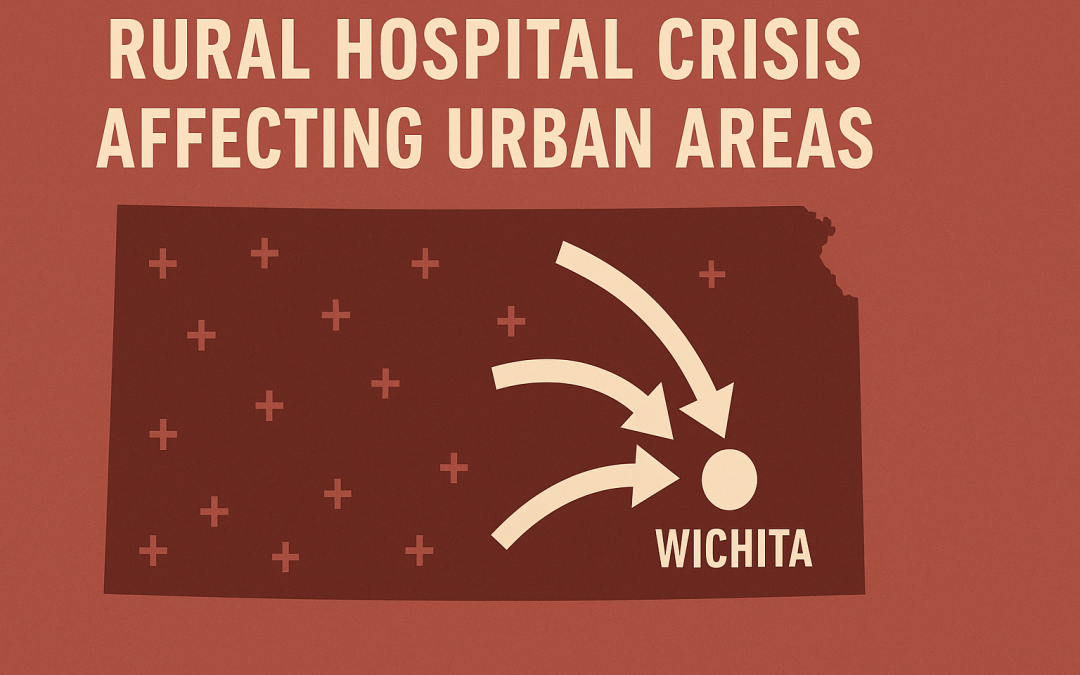
Kansas hospitals are sounding the alarm, and for good reason. According to the Center for Healthcare Quality and Patient Reform, no state in the nation has more rural hospitals at risk of closure than Kansas. Out of the 100 rural hospitals still operating here, 67 are considered at risk. Thirty face an “immediate risk” of closure. These aren’t abstract numbers. They are the facilities where our neighbors, friends, and families deliver babies, receive emergency care, and manage chronic diseases. They are also the employers, economic engines, and community anchors in small towns across our state.
The causes are well-documented: a shortage of nurses and doctors, rising operational costs, and declining payments from Medicare, Medicaid, and private insurance. Put simply, our hospitals are being asked to do more with less—and eventually, “less” means closure.
For too long, it has been easy for rural Kansans and urban Kansans to view themselves as living in separate worlds, each with its own problems and priorities. But when it comes to healthcare, that division is a dangerous illusion. The collapse of rural hospitals does not stop at county borders—it cascades directly into Wichita’s emergency rooms, specialty clinics, and surgical centers. Every rural closure means more patients driving into the city, more strain on already-full hospitals, and ultimately longer waits and poorer outcomes for Wichita families. You don’t have to care about “saving rural America” to care about self-preservation in Wichita. The truth is simple: the loss of rural hospitals shortens lifespans and diminishes quality of life for every Kansan, including those who live in our largest cities.
Why This Matters for Wichita
Every time a rural hospital cuts services, patients who once received care locally are pushed into the referral networks of Wichita’s major hospitals. Emergency rooms in Sedgwick County already run at high capacity; adding a steady stream of displaced patients from surrounding counties risks pushing the system past its breaking point.
The result for consumers in Wichita is predictable: longer wait times in the ER, delays in scheduling surgeries, fewer available slots, and significantly longer waits for specialty care, as more patients compete for fewer providers. The nightmare scenario is one where Kansans—despite having insurance—find themselves in long, “socialist-styled” medicine lines, waiting weeks or months for care. Insurance cards don’t guarantee care when there aren’t enough staffed hospital beds or physicians to see you.
Looking ahead, Trump’s One Big Beautiful Bill has scheduled Medicaid cuts that are set to take effect on January 1, 2027, and these cuts threaten to exacerbate an already dire situation. For Kansas hospitals already operating on razor-thin margins, those reductions will directly slash the reimbursement lifeline that sustains emergency rooms, rural clinics, and physician practices across the state. In practical terms, it means less money to pay nurses, fewer resources for rural facilities, and greater financial pressure on Wichita’s largest hospitals as they absorb even more uncompensated or undercompensated care. If policymakers do not intervene, the OBBBA cuts could accelerate the timeline of collapse and force consumers into even longer wait lines, deepening the crisis for every Kansan.
The Provider and Physician Strain
For physicians, this crisis isn’t theoretical. Doctors in Kansas are being stretched thin across multiple service sites. Burnout is accelerating. Younger providers often leave the state for opportunities where reimbursement is higher and workloads are more sustainable. Hospitals that cannot make payroll or guarantee salary contracts risk losing their remaining medical staff, deepening the spiral.
This isn’t only a financial problem—it’s a healthcare law and policy problem. When reimbursement systems consistently underpay hospitals, when commercial insurers can get away with reimbursing below cost, and when the state’s largest health systems are forced to subsidize care for surrounding counties, the legal and financial framework itself becomes unsustainable.
What Can Be Done Now
There are no easy fixes, but there are immediate, sensible steps that could stabilize Kansas hospitals and protect consumers in Wichita and beyond:
Increase Medicare and Medicaid Payments: Federal and state governments must ensure that reimbursements at least cover the cost of care. Paying 65 cents on the dollar, as some Kansas hospitals report, is not sustainable.
Establish Minimum Commercial Insurance Payments: Kansas should consider requiring commercial insurers to pay hospitals and physicians a baseline rate that reflects the actual costs of care. If hospitals are the backbone of our healthcare system, they cannot be left to negotiate from a position of insolvency.
Targeted Stabilization Funding: A state-level stabilization fund could provide short-term relief to facilities at “immediate risk” while longer-term reforms are debated. The cost of letting hospitals collapse, economically and socially, is far greater than the cost of keeping them alive.
Provider Retention Incentives: Programs that attract and retain physicians and nurses in Kansas (through loan forgiveness, tax incentives, and competitive pay) are critical. Without the workforce, no financial reform will matter.
Regional Collaboration and Telehealth Expansion: Kansas should encourage partnerships between rural and urban hospitals, including shared specialty services and telehealth programs. This reduces duplication of costs while ensuring patients still have access to care.
The Bottom Line
Kansas healthcare is at a breaking point. Rural hospitals are closing, physicians are burning out, and urban centers like Wichita are bracing for the overflow. If we do nothing, Kansas consumers could soon face the same delays and rationing we associate with “socialized” systems—only here it will come not by design, but by neglect. Financially, our healthcare premiums continue to climb (and yes, I’m looking at you, Blue Cross and Blue Shield of Kansas), while the system itself teeters on the edge of collapse. If there were ever a textbook example of legislative failure, this is it.
The solution lies in realigning reimbursement, strengthening the provider workforce, and refusing to let financial collapse dictate who in Kansas gets timely healthcare. If Kansas is going to avoid a full-scale healthcare collapse, the Legislature must finally step in and do what it has long failed to do: provide meaningful support to keep our hospitals open, our physicians practicing, and our communities healthy.